
Episode 53: An Osprey Nest for Knepp
On the day that Tim Mackrill and his team install an osprey nesting platform at Knepp, Isabella Tree grabs the chance to chat to the
 Skip to content
Home / The Jay’s Busy Autumn
The Jay’s Busy Autumn
Published October 2026
Across Knepp Wildland, the remarkable jay is making its rounds. Flying back and forth from the oaks, carrying acorns (as many as five at a time!) in their throat pouches to bury as food for the winter ahead. A single jay may cache as many as 5,000 acorns in one autumn, sometimes carrying them considerable distances.
This matters enormously to the oak. Acorns are heavy and, left to themselves, simply drop beneath the parent tree, where there’s little light for a seedling to grow. Oaks are light-demanding trees, and a seedling taking root under the canopy is destined to fail. They rely on animals to carry their seeds further afield, and the jay is their most effective partner.
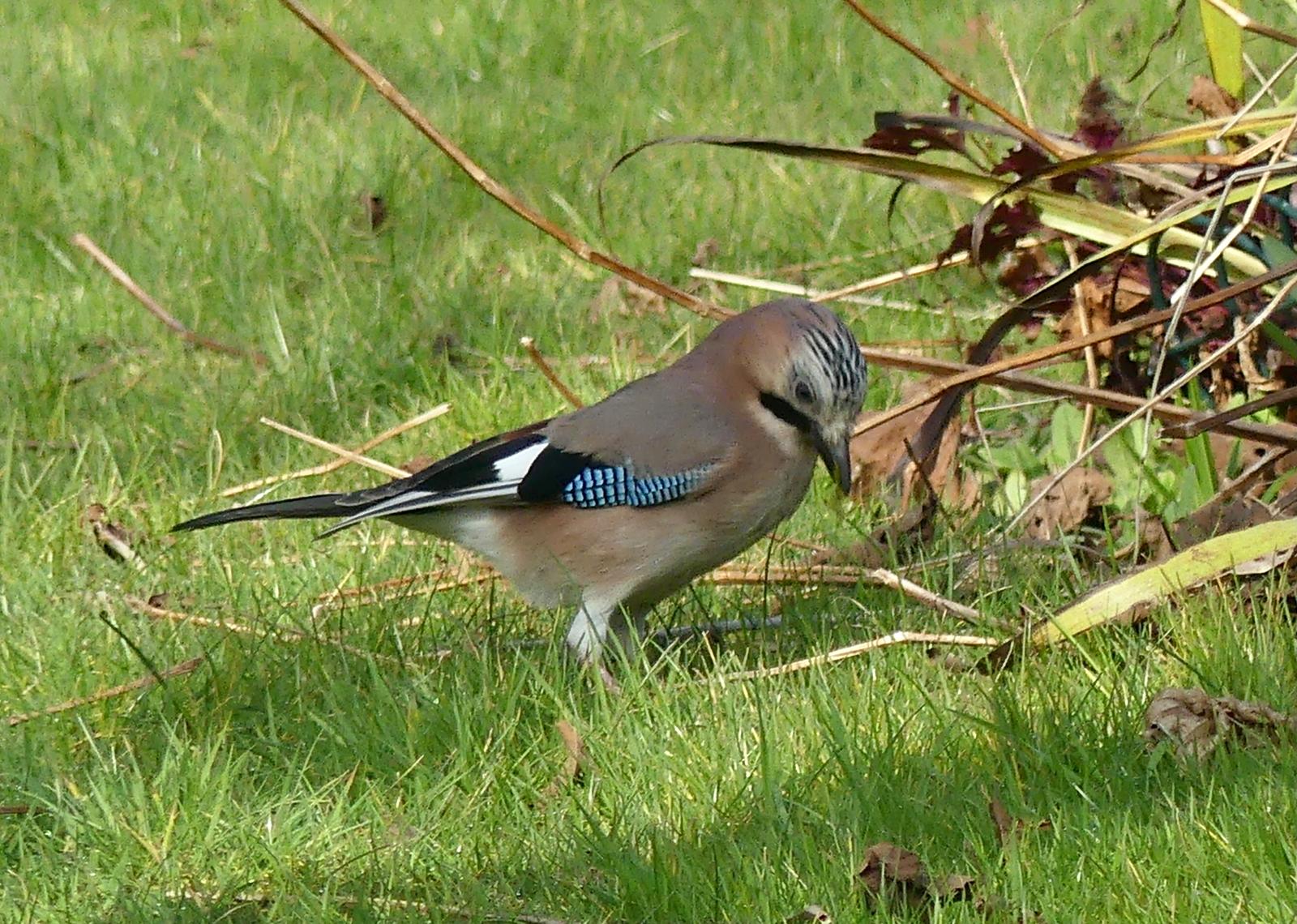
Eurasian Jay at Knepp. Photo taken by Pippa Reay
Jays will collect these acorns fallen beneath the canopy and plant them across open grassland, scrub and woodland edges. They bury them at varying distances from the fruiting trees tens of metres to a few miles away. All the acorns carried during this trip will be buried in close proximity to each other, usually around 0.5-2m apart.
The acorns that thrive are often those pushed into the edge of thorny scrub and hawthorn, which shields the young saplings from browsing deer and grazing animals. As the old forester’s saying goes, ‘the thorn is the mother of the oak.’
Not every buried acorn is recovered straight away. Some are left until spring, when the jay returns to feed them to its chicks. The hawthorn thicket acts as a nursey to protect the acorn sapling, as well as acting as navigational beacon, jogging the jay’s memory . Jays eat acorns all year round, but from April to August, when other food is plentiful, they eat far fewer, and this is when the leftover acorns can germinate.
Even the sapling oaks that the jays return to in June still are not destined to fail, and this is where the oak and jays’ symbiotic relationship becomes even more extraordinary. Jays are not interested in the seedling itself, but the cotyledons – the fat, primal leaves containing stored food reserves from the seed that most plants depend on for their initial burst of energy to grow.
Remarkably, the oak seems to have evolved to expect this. Rather than relying on the store of food packed into its cotyledons, the germinating acorn throws down a taproot almost at once, drawing nourishment from the soil to fuel the young sapling. The cotyledons, in other words, become expendable, a fee the tree is prepared to pay. And the jay comes to collect. In spring, it returns to the seedling, tugs at the stem just enough to lift the underground cotyledons into the light and feeds them to its chicks. More often than not, the plant is unharmed and goes on to become a healthy tree. It is a beautifully balanced bargain evolved over millions of years: the oak rewards the jay for its midwifery, and the jay, in turn, plants the next generation of oaks.
It’s a reminder that scrub, generally considered useless today, was once valued as a nursery for future trees, and the jay, Garrulus glandarius (literally “the chattering acorn gatherer”), treasured as the midwife of the great oaks to come.
And what the jay is planting is no ordinary tree. The oak is less a tree than a world unto itself. From the sapling sheltered in its thorny cradle may grow a giant that stands for a thousand years, becoming home to more species than any other native tree in Britain, some 2,300 in all – from lichens, fungi and beetles to the birds and bats that feed on them, with hundreds depending on it entirely for their survival. Among them, of course, is the jay itself, returning each autumn to gather acorns from the very trees its ancestors planted.
On the day that Tim Mackrill and his team install an osprey nesting platform at Knepp, Isabella Tree grabs the chance to chat to the
By the last week of August, the seemingly endless spell of drought was finally broken. In Greek mythology, the word ‘ichor’ describes the fluid that
Isabella Tree catches up with Carl Sayer, Professor of Limnology & Freshwater Ecology at University College London – aka the Eel Man – as he
Knepp Wildland Safaris, our gardens and campsite are all about the quiet and patient observation of nature.
Some of the species we are likely to encounter are shy or can be frightened by loud noises or sudden movements. Our campsite with open-air fire-pits, wood-burning stoves and an on-site pond is unsuitable for small children.
For this reason, our safaris, garden visits, holiday cottages and campsite are suitable only for children of 12 and over.
This event is available through a separate booking platform.
Once you’ve finished booking your stay, please visit the What’s On Calendar to navigate back to the event to book your tickets.
The What’s On Calendar can be found under the Visit menu at the top of the website.
You’ll receive relevant offers and news by email. This will include information about the Rewilding Project, online store products, the Wilding Kitchen Restaurant / Cafe, and other exciting experiences / events across the Knepp Castle Estate. For more information, view our Privacy Policy.