September 2026 Designers and Gardeners – the Odd Couple or Partners for Life?
By the last week of August, the seemingly endless spell of drought was finally broken. In Greek mythology, the word ‘ichor’ describes the fluid that
 Skip to content
Home / August: Heatwave Survivors

Moy Fierheller | Deputy Head Gardener
August: Heatwave survivors
Published August 2026
Visit Knepp’s rewilded Walled Garden
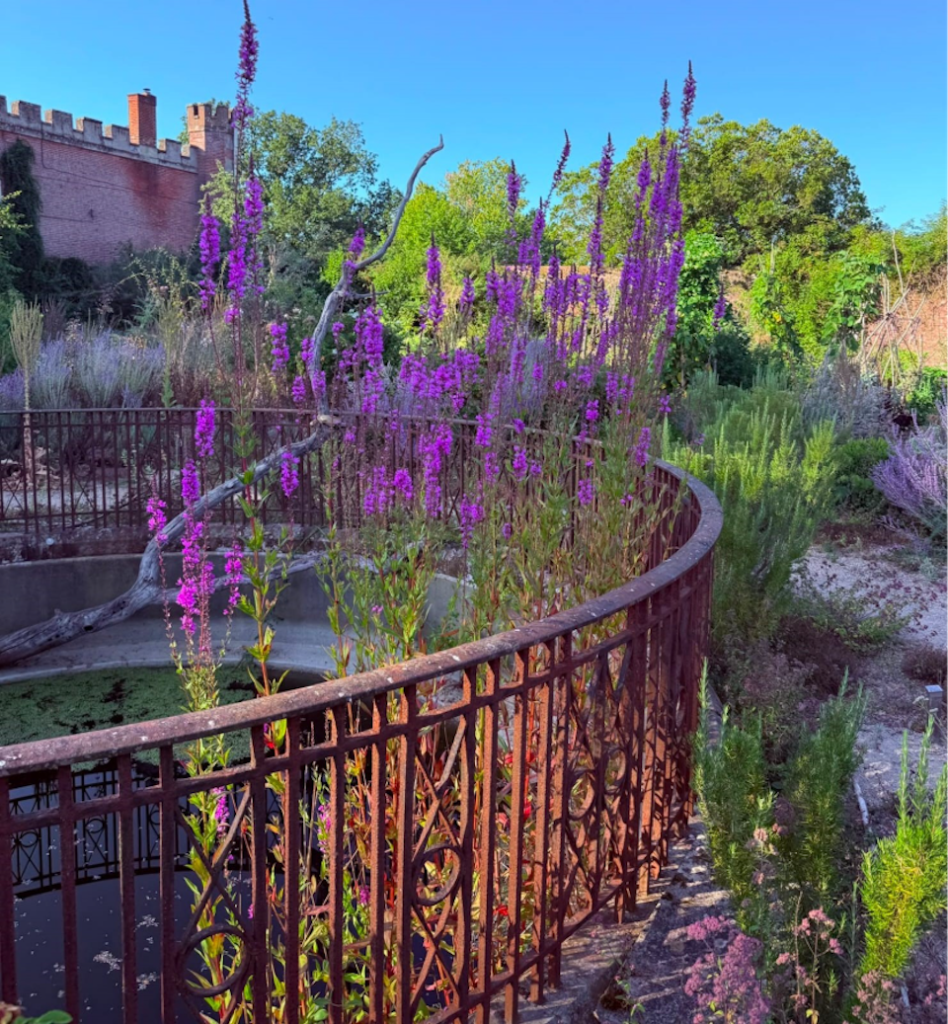
We are suspended in a sea of fine dust. The colours of the garden are dun, bone, driftwood, and cornhusk as we enter our fifth heatwave. The highest temperature so far this year peaks at 38.1°C- at Kew Gardens in London. We’ve spent the last fifty- seven days without rain. As gardeners we live with a low, insistent hum of anxiety. How many plants will we lose? Must we choose which ones to save, which to leave to fend for themselves? What of the countless organisms in the soil – how are they faring? How much of the day can realistically be given over to watering? Should we be using this diminishing resource in a garden, at a time of emergency, when wildfires are breaking out and crops are in such dire need? are in such dire need?
Our garden experiment, though, is designed to cope with these sorts of extremes. It’s based on what we’ve seen in Knepp’s rewilding project – the greater the diversity of habitats and vegetation structure, the greater complexity in the ecosystem, the more likely it is that plants and wildlife will be able to tolerate drought, heat, flooding or freezing. Can this work, though, at smaller scale? Can a garden ecosystem really withstand the conditions we’ve been experiencing this summer?
It’s hard for us to see leaves crisp and brown, wilting and surrendering to gravity and desiccation. Like most gardeners, as curators and collaborators in the space, our emotional attachment and relationship to every plant makes it difficult not to feel responsible for these signs of distress under our watch. But we also know we need to take a breath, to accept that natural processes (albeit accelerated and inflated by the climate crisis) aren’t always pleasing to look at, that change will come, and observation is key to our future management decisions.
So, which plants are able to tolerate this stress, and which habitats could we increase to provide refuge for the ones that are suffering?are suffering?
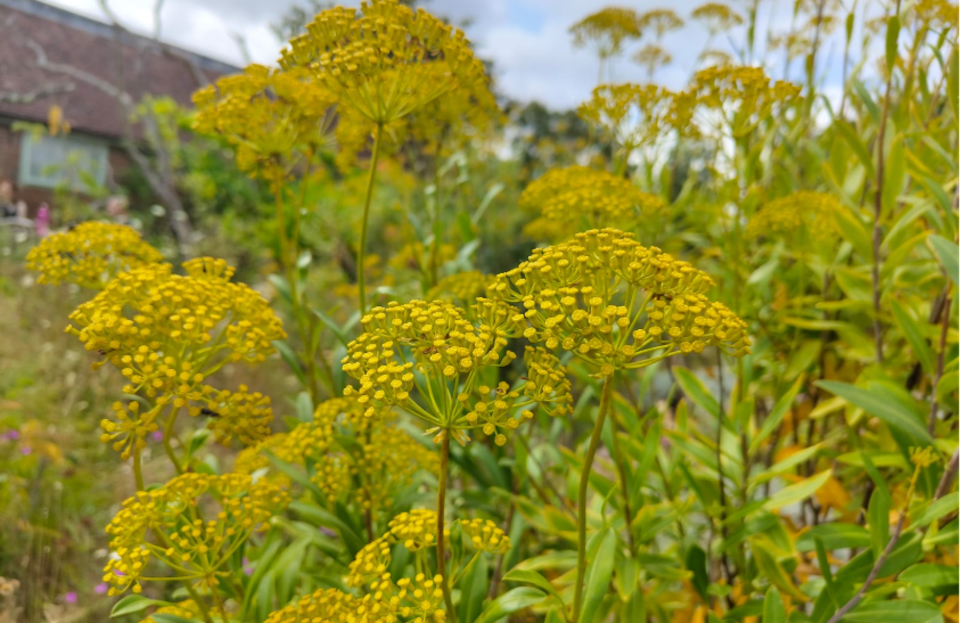
In the Rewilded Garden, we’ve chosen communities of plants from parts of the world with conditions similar to those provided by our mounds and hollows of crushed concrete and sand – dry, stony riverbeds, mountain scree, rocky coasts, and grassland prairies. Unsurprisingly, the plants that are native to the Mediterranean have coped well. The annual rainfall there is typically between 600 and 2000mm, compared to that of the South Downs with an average of 950mm. The Mediterranean has reliably low precipitation between June and August, and almost all of its rainfall occurs between October and April. The rosemary, lavenders, sages, santolinas and rock roses have all evolved strategies over millennia to cope with prolonged exposure to sunlight and heat. Their leaves might be narrow, with less surface area and a waxy coating to protect them from losing moisture; they might be grey or silver to reflect light; they might have fine downy hairs that trap and hold onto morning dew; or a structure that throws shade on the lower growth as the sun moves through its arc. In the garden, umbelliferous plants like shrubby hare’s ear (Bupleurum fruticosum) have slim, shiny, olive-like leaves, and their inverted-umbrella shaped clusters of yellow flowers are small, so they’re less affected by heat and water loss. These shoulder- high shrubs have particularly prolific nectaries, and a constant buzzing from a host of differing fly and hoverfly species greets us every time we brush past.
Many of our grasses and prairie plants are from the Great Plains of North America, where they’ve evolved through rising global temperatures before the last ice age, recolonising as the ice receded, and continuing the Plains’ characteristic treeless mix of grass and herbs in consort with the disturbance of grazing herds and fire. Many of our garden plants from here belong to the Asteraceae, or daisy, family which dominate the tall grassland prairies in the US. The central disc of these daisies is made up of numerous tiny individual “florets’. Like a dandelion, they’re incredibly successful at dispersing seed over great distances.
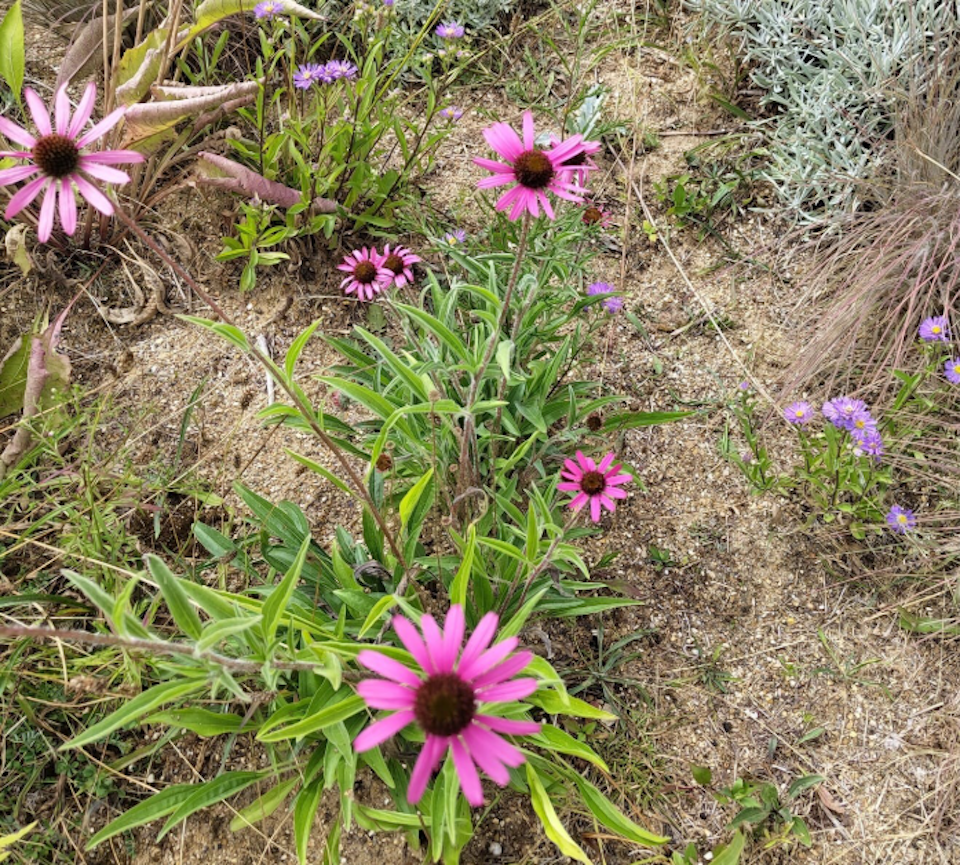
Coneflowers, including the late-flowering species Echinacea tennesseensis ‘Rocky Top Hybrids’ are also from the aster family but are shorter in stature than the earlier species. Their jolly rings of pink petals and darker, bronze-green cones are proving remarkably resilient, as are the tall tickseed (Coreopsis tripteris), more than a metre high with sprays of bright yellow daisy flowers and chocolate-button centres.
It’s also the Asteraceae family that provides the hardiest of the native volunteer plants (sometimes referred to as ‘weeds’) that have survived the intense heat . In these tough times, our Grazing Index has been invaluable. This is a table we’ve created that lists and grades all those ‘volunteer’ plants that have colonised our ecosystem on their own. The number of these species is currently 119. We’ve found that, by awarding them points based on their value to wildlife, humans and the landscape, including how profligate they are, how easy or hard to remove and their aesthetic value, we’ve been able to make informed decisions about how we edit the garden. We’re now thinking to add an additional criteria of stress tolerance, and note a plant’s resilience not just through drought, but prolonged periods of wet weather or strong winds.
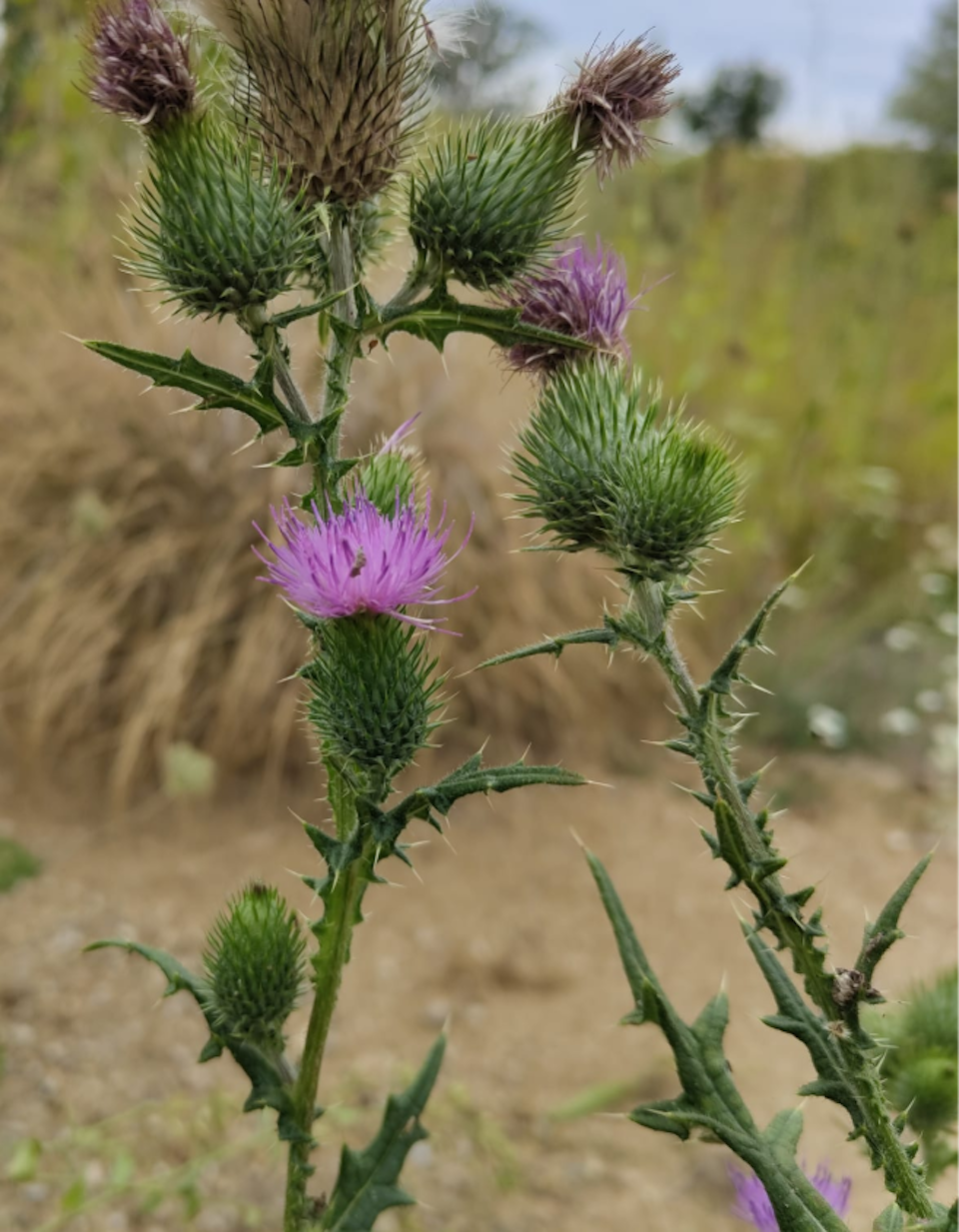
Spear thistle (Cirsium vulgare) with its grey-green, spiked leaves and classic purple florets sprouting from a green bulb is a native opportunist that will readily colonise bare or recently disturbed ground. These ‘ruderals’ are the workhorses of the plant world. Most gardeners dig these up at first sight, but this is where our Grazing Inde ccomes in, where it’s easier to quickly check a plants ecosystem services, than to undertake a lengthy investigation. The UK Insect Pollinators Initiative rates spear thistle in the top ten plants for nectar. The Biological Records Centre ( BRC) Database of Insects and Their Food Plants records over 60 species of beetles, bees, hoverflies, butterflies and moths using this plant, and its seed provides food for finches and linnets. When other plants are unable to sustain a flower for any length of time or fail to produce any flowers at all in the heat, the thistle is a lifeline.
The yellow daisy flowers of the native rough hawkbit (Leontedon hispidus) and common fleabane (Pulicaria dysenterica) are also oblivious to the harsh conditions and are magnets for pollinators. In areas of parched wheaten grass, black medick (Medicago lupulina) provides islands of green. Its creeping habit, long tap root and small leaves help support its small, yellow, pea-like flowers through drought, and you’ll see many bees and the common blue butterfly visiting it.
While we’ve been agonising over whether or not to water the Kitchen Garden and formal gardens around the castle, it’s all too easy to forget that flowers are not just for our pleasure; they’re essential to the life cycle of a host of invertebrates. Thinking about this helped us to distinguish those plants we should prioritise. Insects are cold-blooded and rely on heat from their surrounding environment to regulate their metabolism. They need warmth in their muscles to move and, as it's difficult for their bodies to retain heat, their behaviour is closely linked to the temperature of their immediate environs. Although warmer temperatures can increase populations, there’s a tipping point where studies have shown extreme heat can reduce egg viability or induce sterility. can reduce egg viability or induce sterility.
Butterfly activity, including egg laying, can increase with warmer temperatures – we’ve seen days with clouds of cabbage white butterflies in the Kitchen Garden – but falls away when it becomes too hot. Butterflies can modify their body heat in some measure by ‘shivering’ their wings or angling them away from the sun. We watch them seek shady areas in high temperatures but, again, it’s a fragile balance between surviving and thriving.
Researchers at the University of Sussex have recruited volunteers from all over the UK to investigate whether heatwaves alter the behaviour of bumble bees, honeybees and solitary bees. One of their recommendations is to provide as high a diversity of plant species as possible in a garden, particularly natives, reminding us that bees need both nectar and pollen, and some plants are better at providing one than the other.
Clearly, we’re going to have to use as many tactics as we can as these extreme events become more common. Increasing our drought-tolerant plants and plant diversity, and continuing to build habitat complexity, will help with resilience, creating shade, moisture and cooler microclimates that hold on to water for longer. We can capture and store rainwater more efficiently, too.
These last few months are an exercise in holding our nerve, This garden experiment is as much about observing and respecting natural processes as it is about increasing biodiversity and creating a beautiful space. Curating a garden that is process-led is about learning to release our desire to control and embracing the ebb and flow of nature’s ways.
Photos courtesy of Joshua Chalmers. Moy Fierheller
By the last week of August, the seemingly endless spell of drought was finally broken. In Greek mythology, the word ‘ichor’ describes the fluid that

Isabella Tree catches up with Carl Sayer, Professor of Limnology & Freshwater Ecology at University College London – aka the Eel Man – as he
Isabella Tree catches up with Carl Sayer, Professor of Limnology & Freshwater Ecology at University College London – aka the Eel Man – as he
Knepp Wildland Safaris, our gardens and campsite are all about the quiet and patient observation of nature.
Some of the species we are likely to encounter are shy or can be frightened by loud noises or sudden movements. Our campsite with open-air fire-pits, wood-burning stoves and an on-site pond is unsuitable for small children.
For this reason, our safaris, garden visits, holiday cottages and campsite are suitable only for children of 12 and over.
This event is available through a separate booking platform.
Once you’ve finished booking your stay, please visit the What’s On Calendar to navigate back to the event to book your tickets.
The What’s On Calendar can be found under the Visit menu at the top of the website.

You’ll receive relevant offers and news by email. This will include information about the Rewilding Project, online store products, the Wilding Kitchen Restaurant / Cafe, and other exciting experiences / events across the Knepp Castle Estate. For more information, view our Privacy Policy.