 Skip to content
Meet the Team: Ian Mepham, Food Development Manager
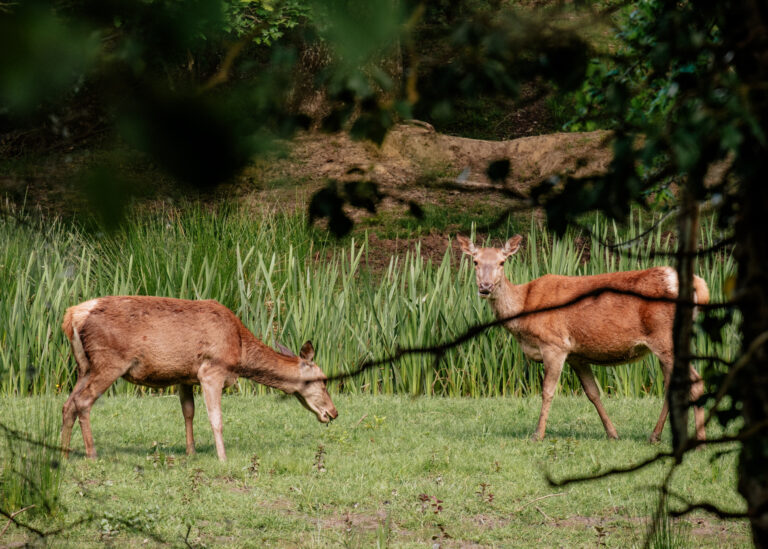
Ian’s spent the past seven years turning Knepp’s free-roaming cattle, pigs and deer into meat and charcuterie as an integral part of our rewilding project. As the herds move into autumn, our rewilding calendar turns to the seasonal harvest – the moment where the ecological logic of a free-roaming landscape and the practical need to keep populations in balance meet.
You’ve been working with Knepp’s meat and charcuterie for several years. What did you first notice that told you these animals had lived differently?
The first thing you notice is that the meat simply doesn’t look like conventional livestock. The colour is often darker and richer, the fat has a deeper cream-yellow tint from a forage-based diet, and the carcasses develop differently because the animals spend their lives moving across a diverse landscape rather than standing in fields and eating a controlled ration or supplementary feed.
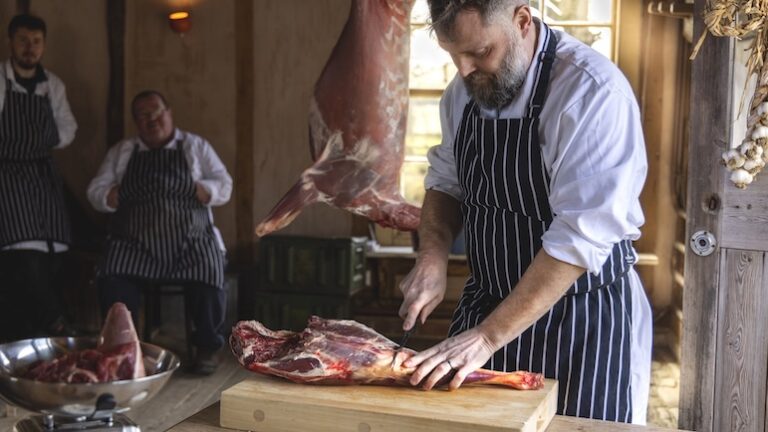
From a butchery perspective, the muscles are more developed and varied. You can literally see the effect of animals that have spent their lives roaming, foraging, rootling and grazing. The meat has character and variation, which is exactly what you’d expect from an outdoor, natural system.
The flavour is what really sets it apart. These animals are expressing natural behaviours, browsing and eating a wide range of plants and herbs, and that complexity comes through on the plate.
What’s the cut customers are still nervous about, and how do you sell it to them?
Skirt steak is probably one of the most misunderstood cuts. Customers often go straight for sirloin or fillet because they’re familiar, but skirt has incredible flavour when cooked properly.
The key is helping people understand that value isn’t always about tenderness. Some of the most interesting cuts come from hardworking muscles because that’s where the flavour develops.
I usually suggest cooking it quickly over high heat, slicing it thinly across the grain and treating it with a bit of confidence. Once people try it, they often come back looking for it again.
Why is charcuterie the right answer to a rewilded supply chain rather than just a nice sideline?
Charcuterie isn’t an add-on for us – it’s fundamental to making the most of a rewilded system.
A conventional farming system aims for consistency and predictability. Rewilding doesn’t work like that. Animals are harvested seasonally, numbers vary, and every carcass is slightly different.
Charcuterie allows us to preserve meat and add value to cuts that might otherwise be difficult to sell fresh. It transforms a seasonal supply into products that can be enjoyed year-round and helps us use more of the animal.
It’s also where craft and creativity come into play. Through fermentation, curing and ageing, we can create flavours and textures that simply can’t be achieved with fresh meat. Products such as our salamis, bresaola and air-dried meats give us another way to tell the story of the animals and the landscape they came from.
What do you say to someone who’s cut down on red meat for their health?
I’d say quality matters more than quantity.
Many people today are choosing to eat less meat but are far more interested in where it comes from, how it was raised and the quality of the product they’re buying. That’s something I completely support.
Our animals live outdoors year-round, eating a natural and varied diet. We’ve previously completed nutritional analysis of our products so that claims about their composition are based on evidence rather than assumptions. For me, it’s not about encouraging people to eat more meat. It’s about encouraging people to make informed choices and, when they do choose to eat meat, to choose something with genuine provenance, high welfare standards, and a clear connection to the landscape it came from.
Discover more about our free-roaming herbivores here.