Front of House
We are looking for dynamic, enthusiastic and passionate Front of House staff with a passion for great service, produce and sustainability to join our growing
 Skip to content
Home / A wonderful winter of wildfowl
A wonderful winter of wildfowl
Fleur Dobner
Published January 2026
While we’ve been bracing against icy mornings and biting winds in England this January, wishing we were somewhere warmer, other species have been arriving here in their multitudes and taking this month’s cold snap in their stride. Each winter, close to 13 million ducks, swans and geese abandon the deep-freeze of the tundra, travelling vast distances to find refuge in the comparatively mild climate of Great Britain. Arctic blasts from the polar vortex have accelerated this movement in recent weeks, pushing large numbers of waterfowl southerly and westwards as lakes and wetlands across northern parts of the continent freeze solid, preventing them from feeding.
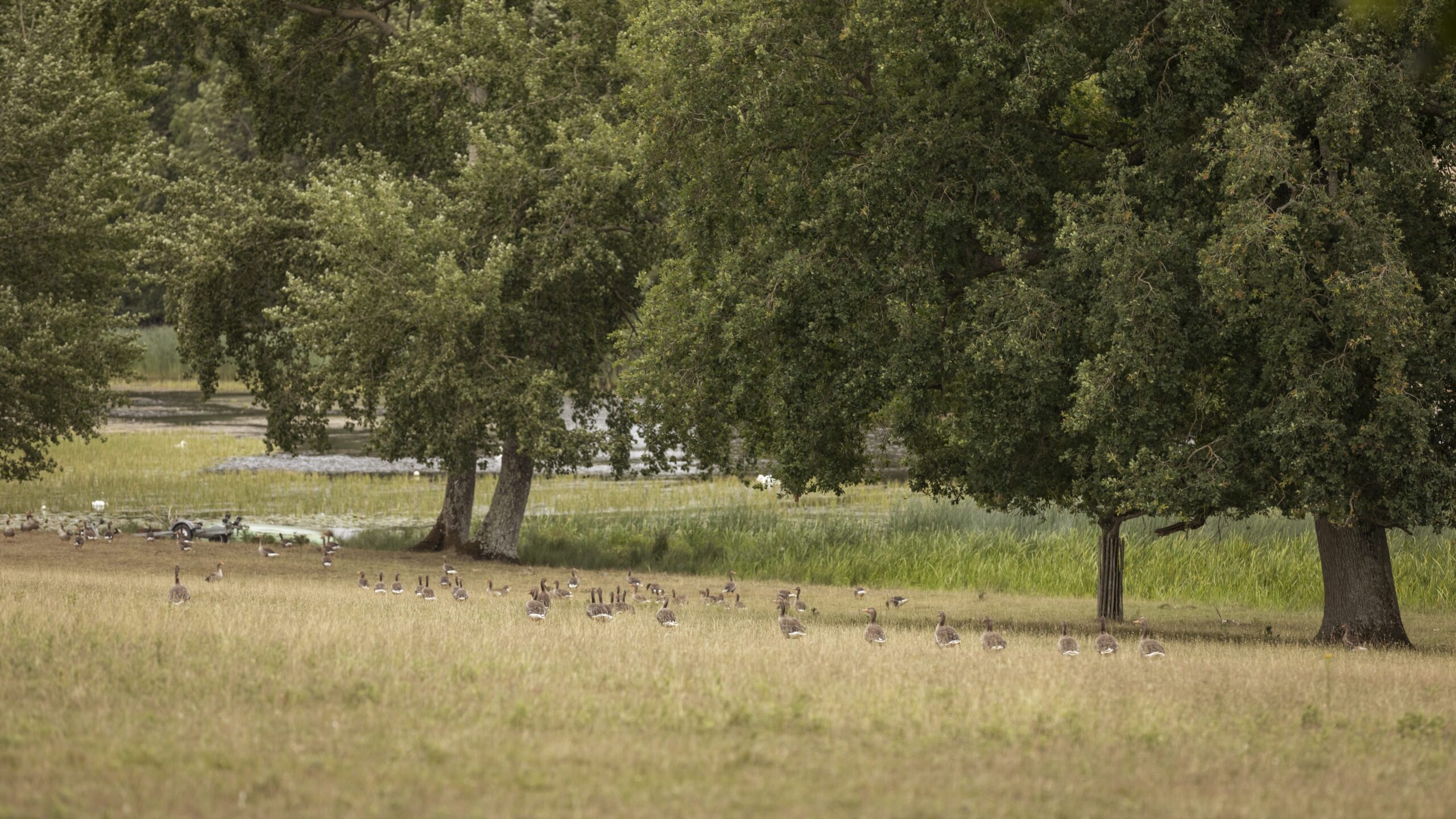
As a result, Knepp Mill Pond and surrounding grassland have filled with life: vast flocks of wigeon, coot, greylag and Canada geese feeding and roosting in their hundreds. On a single morning this week, lead ecologist Matt Phelps recorded 310 teal, 260 Canada geese and 330 mallard.
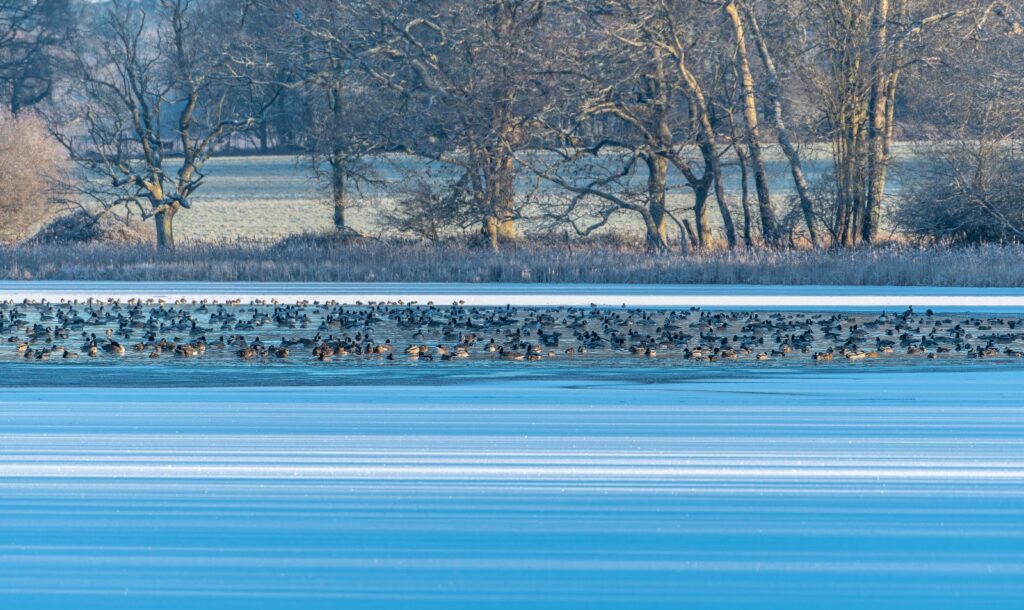
With the extensive loss of wetland habitat across the UK and Europe, the kilometre-long lake at Knepp provides them with a winter haven. En masse, in the comparatively warm temperatures, the birds are able to keep open an area of water by physically paddling around in it, so they can feed, hydrate and swim and dunk their heads for feather maintenance. They congregate around the edges of the ice pool to rest, so they can swiftly return to the water to escape predation by foxes venturing out onto the frozen lake. The proximity of good quality grassland around the lake means the geese don’t have to expend a lot of energy to find places to graze. They take it in turns to play sentinel, keeping watch for foxes, domestic dogs and other predators while their hungry companions feed.
We may be seeing large numbers of waterfowl at Knepp this winter but, increasingly, as the climate warms, northern winters are becoming milder. Over the past 25 years, species which have historically wintered in the UK have declined significantly, particularly Bewick’s swans, the wintering population of which has declined by 96%, and visting goldeneye ducks which have fallen by around 50%, opting, instead, toremain in Scandinavia, Greenland or Russia. Some species may soon cease wintering in the UK altogether.
While reducing or even stopping migration may confer some benefits on winter waterfowl in terms of lowering the risks of collision with powerlines and other infrastructure and reducing mortality from encounters with hunters, there are significant ecological consequences. ‘Short-stopping’ disrupts natural processes such as in nutrient cycling, whereby the birds transfer nutrients across whole countries and continents between aquatic and terrestrial habitats, helping to drive seasonal ecosystem dynamics. Waterfowl also act as important long-distance dispersal agents for aquatic plants and insects, supporting biodiversity and resilience in wetland habitats.
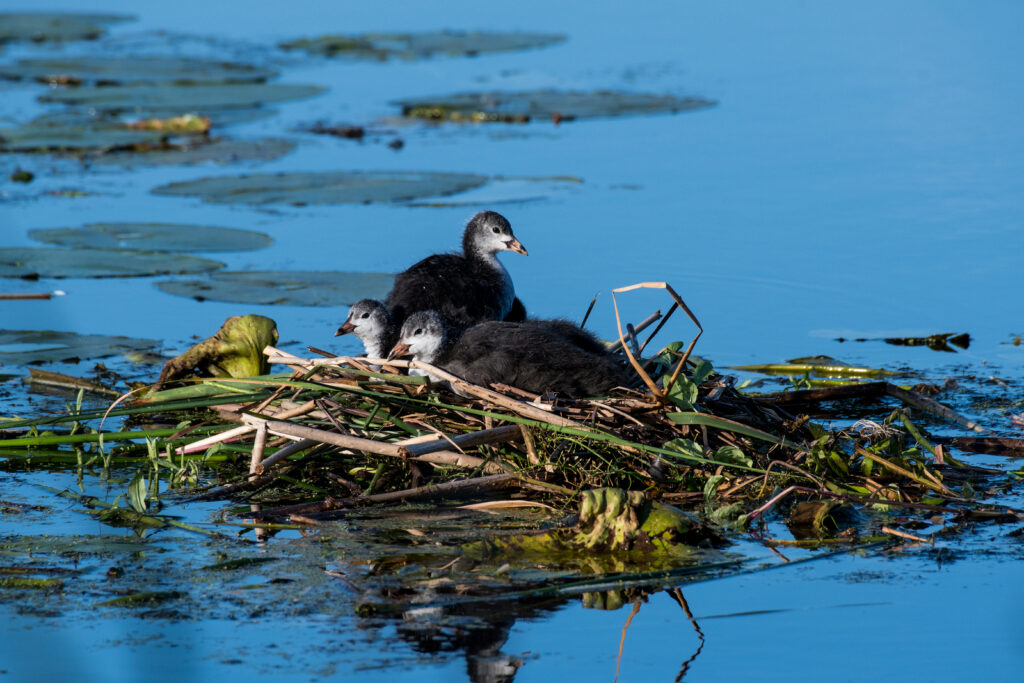
There can also be a physical toll on the birds themselves. For many species, staying north outside the breeding season means steeper competition for limited supplies of food which can affect body condition, survival and subsequent breeding success.
Beyond these ecological impacts, there is also a quieter loss for us: the diminishing spectacle of wintering wildfowl in the UK, reducing our connection to seasonal change and the natural rhythms that have long defined our wetlands and winters.Future generations may never witness the incredible spectacle of these birds in vast numbers and the noisy exuberance that brings such cheer in our coldest months.
Long-term monitoring helps us understand these dynamics and Knepp contributes to the British Trust for Ornithology’s Wetland Bird Survey (WeBS), one of Knepp’s longest-running ecological datasets. Since records began in 1960, an impressive 64 species have been recorded on the Mill Pond with peak counts of 1200 black-headed gulls in 2010 and 23 Bewick’s swans in 1988. As the impacts of climate change intensify, the need for restored, functioning ecosystems has never been greater. Rewilding is not about turning back the clock; it is about giving nature the space and complexity it needs to adapt to a more volatile climate. Without landscapes capable of supporting migrating wildfowl, we risk losing not only spectacular – if increasingly rare – winter gatherings, but the ecological processes they drive.
Please take special care when visiting any pond, lake or wetland where birds are congregating not to disturb them. Taking flight in freezing weather burns up calories. Every time birds are unnecessarily flushed into the air affects their chances of survival.
We are looking for dynamic, enthusiastic and passionate Front of House staff with a passion for great service, produce and sustainability to join our growing
Isabella Tree catches up with two of the White Stork Project volunteers, Tim Morgan and Rosemary Dewan, as they prepare food for the non-flying storks
We’re looking for capable, reliable and energetic Barista & Bartenders to join our busy hospitality operation at Knepp Wilding Kitchen. Working across our main bar
Knepp Wildland Safaris, our gardens and campsite are all about the quiet and patient observation of nature.
Some of the species we are likely to encounter are shy or can be frightened by loud noises or sudden movements. Our campsite with open-air fire-pits, wood-burning stoves and an on-site pond is unsuitable for small children.
For this reason, our safaris, garden visits, holiday cottages and campsite are suitable only for children of 12 and over.
You’ll receive relevant offers and news by email. This will include information about the Rewilding Project, online store products, the Wilding Kitchen Restaurant / Cafe, and other exciting experiences / events across the Knepp Castle Estate. For more information, view our Privacy Policy.