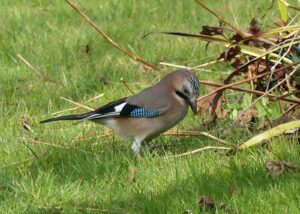
The Jay’s Busy Autumn
Across Knepp Wildland, the remarkable jay is making its rounds. Flying back and forth from the oaks, carrying acorns (as many as five at a
 Skip to content
Home / April: What have spiders ever done for us?

Moy Fierheller | Deputy Head Gardener
April: What have spiders ever done for us?
Published May 2026
Visit Knepp’s rewilded Walled Garden
April is the month of sliding doors: the extravagant explosions of cherry blossom shed their petals in showers of confetti and make way for the simple beauty of hawthorn flowers. In the garden the late-winter, white, cupped flowers of ornamental Japanese quince (Chaenomeles speciosa ‘Nivalis’) are transforming into embryo fruits while the buds of Clematis ‘Elizabeth’ (Clematis montana var. Rubens ‘Elizabeth’) are bursting open in scented blush pink. The heralds of spring, the daffodils, retire gracefully while the rainbow-coloured goblet flowers of tulips toast the coming of light into the evenings.
Easter came early, as has spring. The thinning shell of winter has cracked open, and the glorious exuberance of the white Persian lilac (Syringa x persica ‘Alba’) is heavy with scent. Hanging purple garlands of wisteria are similarly heady and the profusion of bright yellow Scotch broom (Cytisus scoparius) takes our breath away.
We’re busy planting out while there’s still moisture in the ground. Although the rains were ceaseless in the winter, the month has been full of dry, windy days of sun and chilly nights. Many plants that we’ve grown from seed sown last autumn or in February and March are now mature enough to plant out. There’s a rush to release peas, salads and broad beans from the confines of their plug trays and get them into the Kitchen Garden, and the tomato plants are ready to spread their roots in the raised beds in the greenhouse.
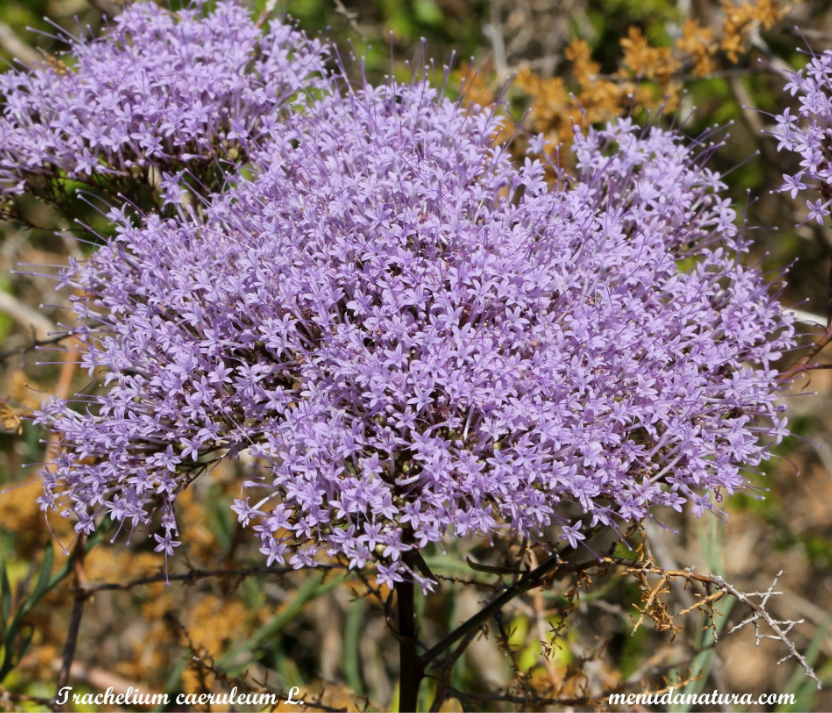
In the Rewilded Garden our minds turn to mid and late summer, to provide plants for pollinators that are also visually interesting. Blue throat wort (Trachelium cearuleam) has large domes of tiny, violet-blue flowers that are rich in nectar, and the tall Corsican larkspur (Delphinium requenii) sports spikes of lavender-blue flowers from June to September beloved by bees. We’ve added to our existing stock of late-flowering bulbs with some more South African cape lilies, also known as Cornish lilies. They were introduced into the UK by Athelstan Cornish-Bowden in 1904 -hence their Latin name, Nerine bowdenii. We’ve chosen the varieties ‘Vesta’ and ‘Alba’ for their pale pink and pure-white star-shaped flowers that emerge in October, when butterflies can boost their store of nectar before winter hibernation or migration.
With every day bringing out more flowers so too, come the insects. We were excited to welcome legendary invertebrate surveyor Graeme Lyons into the garden for the third time. It’s important to collect empirical data in our garden experiment, both to guide us in our decision-making and to measure the success or otherwise of the design and curation of this ‘box of diverse habitats’. Graeme conducted a baseline survey of the garden in 2020 (just before Tom Stuart-Smith’s redesign) and revisited the garden in 2023. The results of the second survey were encouraging – a 33% uplift in the species count, from 333 to 434, in the three years since rewilding. Although this was a fantastic result, it doesn’t represent a definitive win: the vagaries of weather or naturally occurring population surges can skew data and it’s only the amalgamation of several surveys over a long period of time that can really prove the achievement of our goal of increasing biodiversity in the garden.
Graeme will come every month until September, recording what he finds in a two-hour window over four ‘compartments’ of the garden. He uses a variety of collection methods – sweeping with a net and beating – this involves placing a white tray under vegetation and sharply tapping the stems to dislodge the insects onto the tray. He can spot and identify specimens with greater ease on the white background. He also uses a motorised suction sampler designed to gently suck insects like leafhoppers through a nozzle and into a mesh bag that might be missed with the sweeping net. Another method is grubbing, where he uses his gloved hand or a small trowel to discover insects concealed in shallow soil or organic material. And simply searching meticulously through flowers and bare ground and turning over logs and rocks.
It’s so exciting to view some of his finds on the spot through a hand-held magnifying lens, although we won’t see his finished report until late winter of 2027. Some of the species are incredibly difficult even for him to identify, and he spends the winter months bent over a microscope to be sure of his findings.
Close up, the markings of the insects he shows us, temporarily held in small glass vials, are a world of colour and fascinating patterns. The carrion beetle he found (Thanatophilus rugosus) has a harlequin coat of every shade of grey, and the triangle spider (Hyptiotes paradoxus) is like a dark ginger tabby cat. It’s named not for its markings, but its web. It spins a triangular-shaped orb web with two radial threads and keeps it taut by sitting in one corner holding the threads. When an insect is unwittingingly caught, the spider slackens and tightens the tension of the threads until the victim is well and truly entangled. The ingenuity of nature’s creatures!
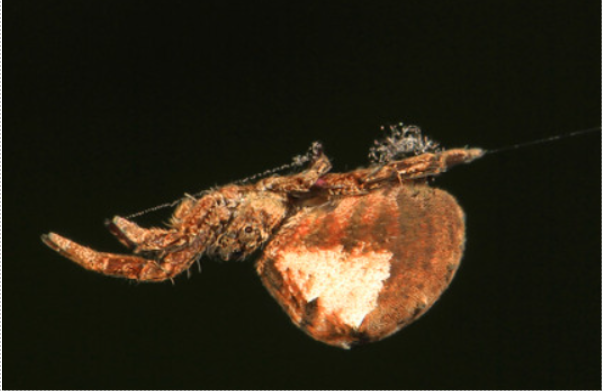
Triangle spiders were first recorded in 1860 in Cumbria. They favour evergreen trees and shrubs that grow in amongst broad-leaved species. The one Graeme found was amongst the clipped yew trees in the Kitchen Garden. It’s often thought that ornamental plants, particularly conifers, are biological deserts but a study carried out in 2024 in coniferous forestry plantations found 191 species of spider. The ecological complexity of gardens, with their blend of long and short grass, an array of shrubs and trees, ponds, wood, stone or brickwork, provides plenty of opportunities for spiders. For web-building spiders, complex structures are essential for constructing their spiral masterpieces, and it’s generally the more diverse and evolved habitats that have been found to favour spider diversity and abundance. Their natural habitat ranges from deserts and caves to freshwater edges, from forest canopies down to leaf litter.
Because spiders are sensitive to habitat structure, pesticide use and climate, they’re often used by ecologists as bioindicators to assess the health of an environment.
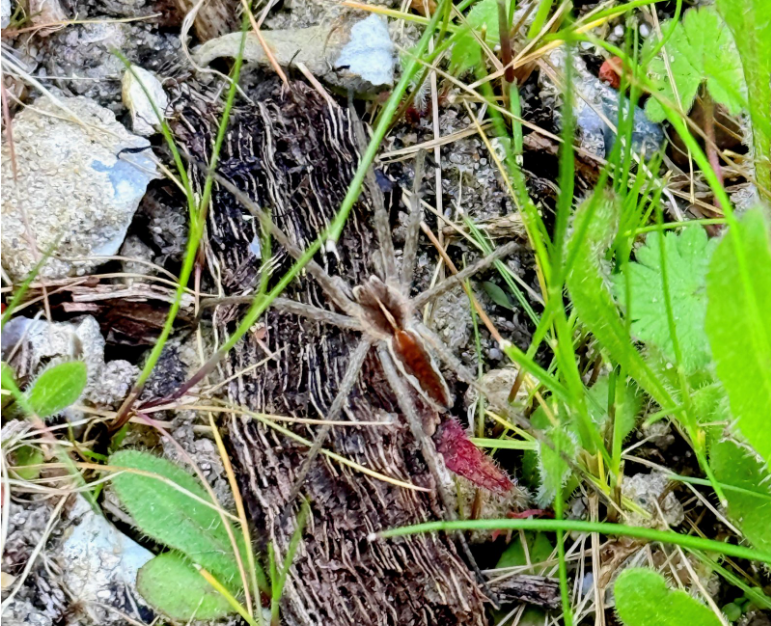
A British garden can host more than a hundred different species of spider. In his 2023 survey Graeme identified 90 species in the Walled Garden.
Some of them may be common to most of us, like the large female garden spider (Araneus diadematus) whose webs festoon our gardens in autumn, the tiny money spider(Linyphiidae) we were taught to love as children (folk tales can be the saving grace for some spiders) or the Noble false widow spider(Steatoda nobilis) that has received a bad press; the media reporting a rise in ‘spider bite’ hospital admissions attributed to a population surge of false widows. In fact, there is little evidence of spiders being seen to issue a bite. The conservation charity Buglife states there’s no proven link between spider bites and bacterial infection and an allergic reaction to a spider bite in the UK is similarly unrecorded. Only a few spiders have fangs large enough to pierce human skin and instances are rare.
Where does arachnophobia, our phobia of spiders come from? One theory is that it’s an inherited fear, a trait passed down through the phenomenon of ‘epigenetics’ – how gene activity can be changed without altering the DNA sequence – in this case the ‘fear’ entering the gene pool from ancestors who inhabited areas where dangerous spiders were prevalent. Only 0.5% of spiders are potentially harmful to humans and there are almost 50,000 known species globally, with experts estimating the number of species that are awaiting discovery or classification could double that figure. Another study, in 2021, suggested that our ancestors came to associate spiders with their close relative – scorpions, an ancient species that, even today, kill an estimated 2,600 people a year. Spiders themselves are no spring chickens – fossil records show they’ve existed for at least 380 million years.
Yet, spiders are important allies for the gardener, and fundamental to the ecosystem. As carnivores, they are vital natural pest control – regulating insects and helping maintain biodiversity. A garden spider preys on a variety of flying insects it catches in its webs, and wolf spiders amongst others, focus on ground-dwelling creatures. All produce silken thread regardless of whether they web build. It’s used for protecting eggs and most importantly, ‘ballooning’, where young spiders disperse by releasing a thread and riding air currents, sometimes travelling many kilometres to new habitats. Spiders are also essential in the food chain. Small mammals, birds and amphibians all include them in their diets. Spiders’ that dig burrows for shelter or hunting, like trapdoor spiders (Ctenizidae) can aerate the soil by loosening compacted material as they move through it and help with decomposition of organic matter by aerating and turning it over as they chase down prey. Ground dwelling species that anchor their webs to the soil can prevent soil erosion and trap moisture.
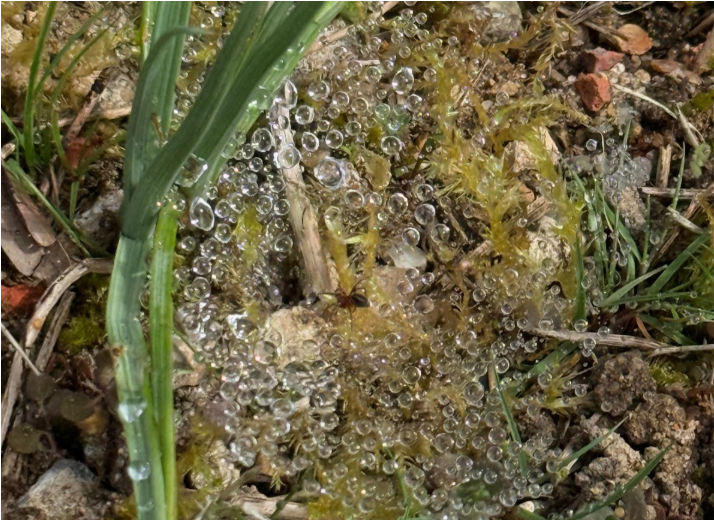
Much of our garden experiment is about a change of mindset. Knowing how important spiders are, we’re now conscious of trying to overcome any inherited or conditioned alarm when we come across one. Our reaction is now one of jubilation. Brilliant! That’s the aphids on the rose buds taken care of, or the black fly on our broad beans, or the flies in our potting shed.
What have spiders ever done for us? Quite a lot it turns out.
Photos courtesy of Charlie Harpur, Joshua Chalmers, Manudanatura.com
Garden Tips – May 2026
What we’re reading:
Lyons,G, Pan-Species Listing, Pelagic Publishing 2026
Home | British Arachnological Society
The NHBS Guide to UK Spider Identification
Emotions triggered by live arthropods shed light on spider phobia | Scientific Reports
The etiology of phobias: a nonassociative account – ScienceDirect
Habitat structure and spider foraging | Springer Nature Link
Spider Habitat Classification and the Development of Habitat Profiles
Across Knepp Wildland, the remarkable jay is making its rounds. Flying back and forth from the oaks, carrying acorns (as many as five at a

On the day that Tim Mackrill and his team install an osprey nesting platform at Knepp, Isabella Tree grabs the chance to chat to the
By the last week of August, the seemingly endless spell of drought was finally broken. In Greek mythology, the word ‘ichor’ describes the fluid that
Knepp Wildland Safaris, our gardens and campsite are all about the quiet and patient observation of nature.
Some of the species we are likely to encounter are shy or can be frightened by loud noises or sudden movements. Our campsite with open-air fire-pits, wood-burning stoves and an on-site pond is unsuitable for small children.
For this reason, our safaris, garden visits, holiday cottages and campsite are suitable only for children of 12 and over.
This event is available through a separate booking platform.
Once you’ve finished booking your stay, please visit the What’s On Calendar to navigate back to the event to book your tickets.
The What’s On Calendar can be found under the Visit menu at the top of the website.

You’ll receive relevant offers and news by email. This will include information about the Rewilding Project, online store products, the Wilding Kitchen Restaurant / Cafe, and other exciting experiences / events across the Knepp Castle Estate. For more information, view our Privacy Policy.