March: Bug hotels v natural shelter – finding the balance
The year begins by plummeting us into a deep freeze – snow and ice lay over the country for a week, shadowed by biting arctic
 Skip to content
Home / Bring back the bison – a new animal for Knepp?
Bring back the bison – a new animal for Knepp?
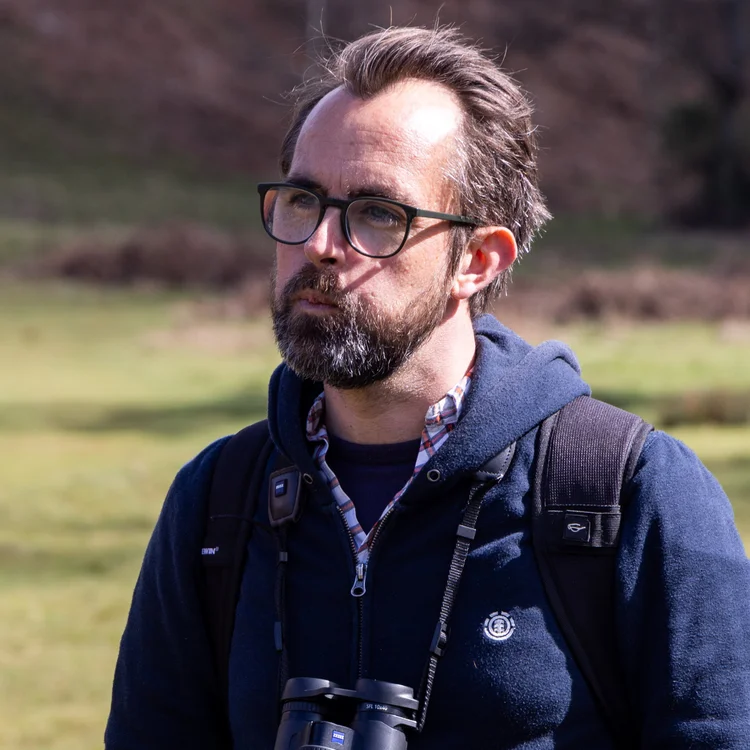
Matt Phelps, lead ecologist
Published April 2026
Walking along the edge of the Kraansvlak nature reserve on the North Sea coast of the Netherlands, sandwiched between the casino town of Zandvoort and the busy Randstad conurbation, the influence of bison is everywhere: cropped grasslands, great bunkers in the sand, narrow tracks threading through the vegetation. These immense, shaggy animals – Europe’s heaviest land mammal – graze, browse, trample, de-bark trees, and wallow in the dunes, sometimes bulldozing through dense scrub. In doing so, they are reshaping a landscape that had been static for centuries.
A group of twenty ecologists and safari guides from Knepp, led by Knepp’s owner Charlie Burrell, recently travelled to the Netherlands to see first-hand how European bison – or wisent – are transforming landscapes, and how people are adapting to living alongside them, often surprisingly close to cities like Amsterdam and Rotterdam.
For those familiar with the rhythms of rewilding at Knepp, much of what we saw felt quietly familiar. Across the Netherlands, dunes, wetlands and former farmland are being allowed to evolve more freely, with natural processes taking the lead. Increasingly, bison are part of that process, and are proving themselves more than worthy of the title of keystone species, driving dramatic recoveries in biodiversity.
Once, native European bison ranged in herds of many hundreds across the continent from France to Belarus and northern Russia to the Urals. By the Middle Ages all three subspecies had been hunted to extinction over much of Europe, though the final blows were delivered only relatively recently. The Carpathian wisent (Bison bonasus hungarorum) went extinct around 1850. The last wild Bison bonasus bonasus were shot in the Białowieża Forest on the Poland/Belarus border in 1921, and the last of the Caucasian wisent (B. b. caucasicus) were shot in the north-west Caucasus in 1927.
The European bison that survive today are descendants of just a dozen Bison bonasus that had been kept in zoos. Following breeding and reintroduction programmes orchestrated by the likes of Rewilding Europe, the Endangered Landscapes and Seascapes Programme and ARK Nature, around 7,000 bison now roam Europe in free-ranging herds, like the ones we’re seeing now in the Netherlands. It’s been an astonishing rewilding success story.
Before the bisons’ arrival in the Kraansvlak in 2007, this unique sandscape was rapidly closing over following a dramatic collapse in the rabbit population. Coarse grasses thickened, scrub spread, and the open character of the landscape – including internationally rare wildflower lawns – was slowly disappearing. Without the grazing and disturbance of rabbits, the whole ecosystem was becoming static and simplified. It was undergoing what scientists call a ‘catastrophic shift’. The bison were introduced in a last-ditch attempt to reverse that process. And their success has been spectacular.
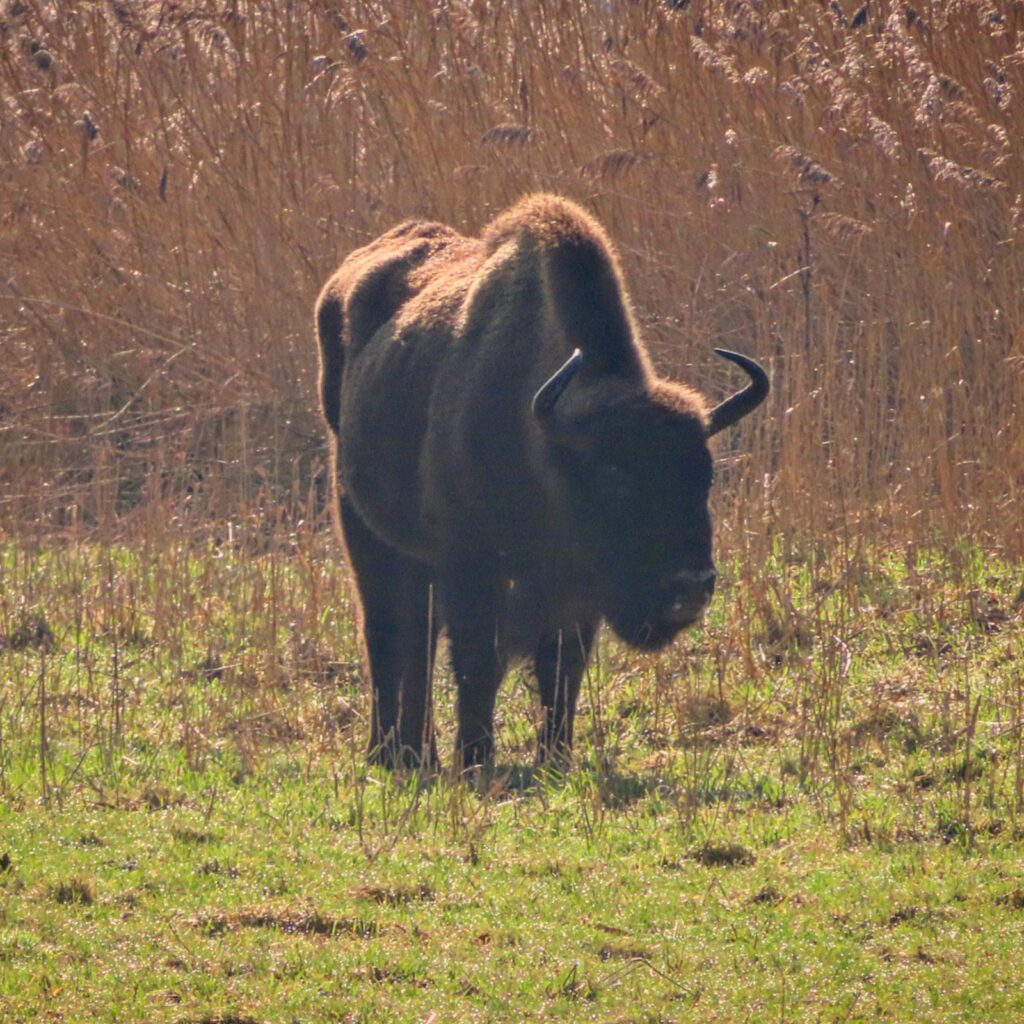
As both grazers and browsers, they tackle tough grasses while also stripping bark from trees in winter, suppressing regrowth and allowing light to reach the ground. Their hooves churn up bare patches of soil, and their wallows create pockets of exposed sand. The result is a constantly shifting mosaic of habitats.
This disturbance is exactly what many species need. Sand wasps, mining bees and tiger beetles colonise the bare ground; sand lizards and small mammals use the bison trails; red-backed shrike now breed here; and even in February, the sound of woodlarks fills the air.
Further south, at Slikken van de Heen in the Scheldt Delta, the setting shifts to wetlands and willow scrub, but the principle remains the same. Here, bison graze alongside Konik ponies and Rode Geus cattle. Together, these large herbivores prevent the landscape from closing into uniform woodland, maintaining instead a rich patchwork of scrub, grassland and developing woodland, not unlike Knepp.
Across these sites, the philosophy is consistent: rather than managing every hectare by hand – an expensive and, ultimately, limiting approach – animals are allowed to do the work. Large herbivores are nature’s landscape architects. Their grazing varies seasonally; their trampling creates disturbance; their movements open up vegetation. In short, they create the messy, uneven habitats on which wildlife thrives.
Yet perhaps the most striking aspect of the trip wasn’t ecological, but cultural. In Britain, conversations about large animals quickly turn to risk. How dangerous are they? What if someone gets too close? These are understandable concerns. Britain has lacked most of its large wild herbivores for centuries, and our laws and expectations reflect that absence. Landscapes are tightly managed; wildness is limited.
In the Netherlands, the tone feels different. At Kraansvlak, visitors walk and cycle through the reserve knowing bison are present. Clear information explains how to behave: keep your distance, don’t approach calves, give animals space. In other words, treat them as wild. What stands out is how normal their presence feels. Bison are not treated as extraordinary, simply as part of the landscape.
That acceptance is no accident. Dutch rewilding organisations have invested heavily in public engagement, helping people understand both the risks and the rewards. Serious incidents are extremely rare.
For those of us working in rewilding in Britain, this raises an important question. Ecologically, what could bison add?
A question I have been asked a few times since the trip is “what will the bison bring that the animals we have free roaming at Knepp don’t already do?” The answer lies in their behaviour. Bison are particularly effective at breaking through dense scrub, browsing woody vegetation, and de-barking trees — often killing them and creating standing deadwood – a vital habitat for so many fungi, invertebrates and many more. This process opens up the canopy, allowing light to flood the ground and encouraging regeneration.
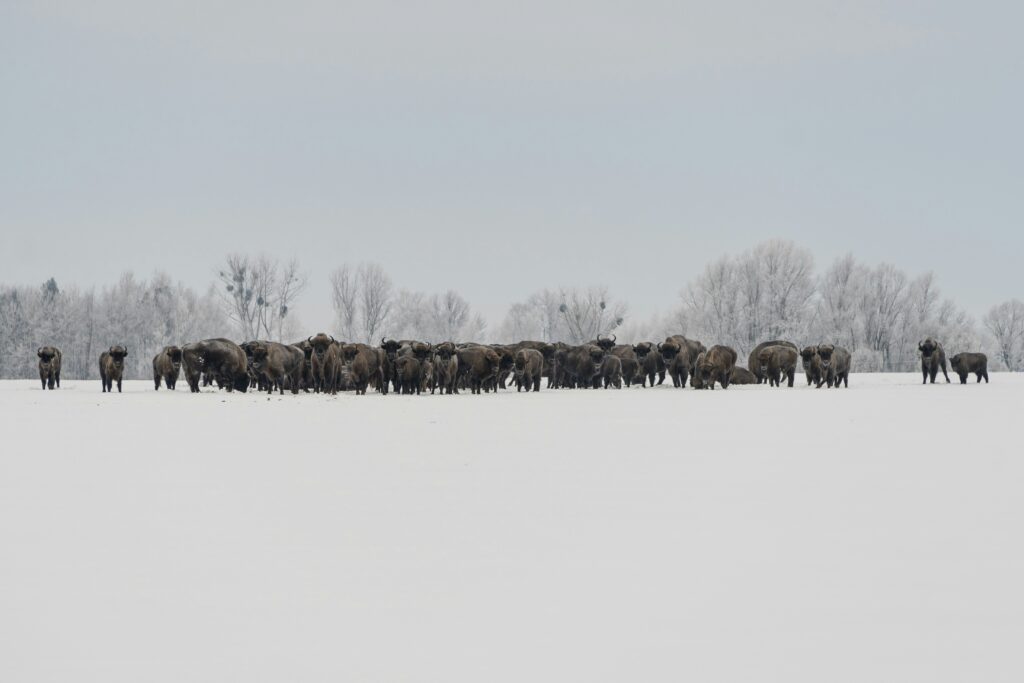
They also create more frequent and larger disturbances than cattle or deer. Their wallowing produces bare earth; their grazing patterns open up tight swards; their movement creates pathways through dense vegetation. In doing so, they help reset succession – the linear progression from grassland to woodland – again and again.
At Knepp, this could mean more varied grassland structure, greater diversity within the sward, and a continual opening-up of areas that might otherwise tip too quickly towards closed woodland. Their debarking, browsing and physical disturbance would add another layer of complexity — accelerating the creation of niches for insects, birds and plants that depend on light, space and change. In short, they would deepen the dynamism already at the heart of Knepp’s landscape.
We’ve already seen how powerful large herbivores can be when given freedom. Old English Longhorn cattle, Exmoor ponies, Tamworth pigs and deer have transformed former arable fields into a shifting mosaic of scrub, grassland and regenerating woodland, allowing species like turtle doves, nightingales and purple emperor butterflies to return and thrive for the first time in decades. Bison could add another dimension to that ecological toolkit.
Britain has already taken a first step. At the Wilder Blean project in Kent — a partnership between Kent Wildlife Trust and Wildwood Trust — European bison were introduced in 2022 to help restore natural processes in ancient woodland. They quickly began stripping bark, trampling vegetation, creating wallows and opening dense canopy. Wildlife responses have been rapid.
It’s an exciting project, but it also highlights the challenges. The animals are confined within extensive, costly fencing and managed under regulations designed for conventional livestock. The species may be returning — but policy has yet to catch up. Standing at Kraansvlak, watching bison grazing quietly just metres away, it was hard not to feel a sense of possibility. Wildness does not have to exist only in remote places. It can live at the edges of towns and cities — restoring lost processes and enriching human experience.Rewilding at Knepp has always been about trusting those processes: allowing animals to shape the land rather than dictating outcomes. What we saw in the Netherlands felt like a natural extension of that philosophy.
If we want richer, more resilient landscapes in Britain, we may need to rethink not only which species belong here, but also the frameworks that govern how we live alongside them. Because the lesson from the Dutch dunes is simple: give nature the right tools, and it is remarkably good at the rest.
The year begins by plummeting us into a deep freeze – snow and ice lay over the country for a week, shadowed by biting arctic
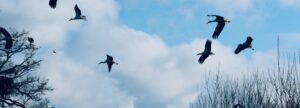
It’s been about six centuries since white storks and red kites have encountered one another in the UK.
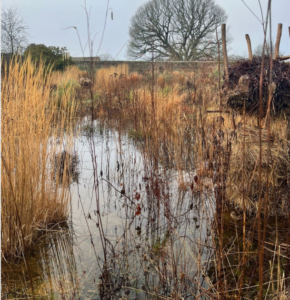
The year begins by plummeting us into a deep freeze – snow and ice lay over the country for a week, shadowed by biting arctic
Knepp Wildland Safaris, our gardens and campsite are all about the quiet and patient observation of nature.
Some of the species we are likely to encounter are shy or can be frightened by loud noises or sudden movements. Our campsite with open-air fire-pits, wood-burning stoves and an on-site pond is unsuitable for small children.
For this reason, our safaris, garden visits, holiday cottages and campsite are suitable only for children of 12 and over.
You’ll receive relevant offers and news by email. This will include information about the Rewilding Project, online store products, the Wilding Kitchen Restaurant / Cafe, and other exciting experiences / events across the Knepp Castle Estate. For more information, view our Privacy Policy.